How to Automatically Cut Video Highlights and Create Viral Content
Other
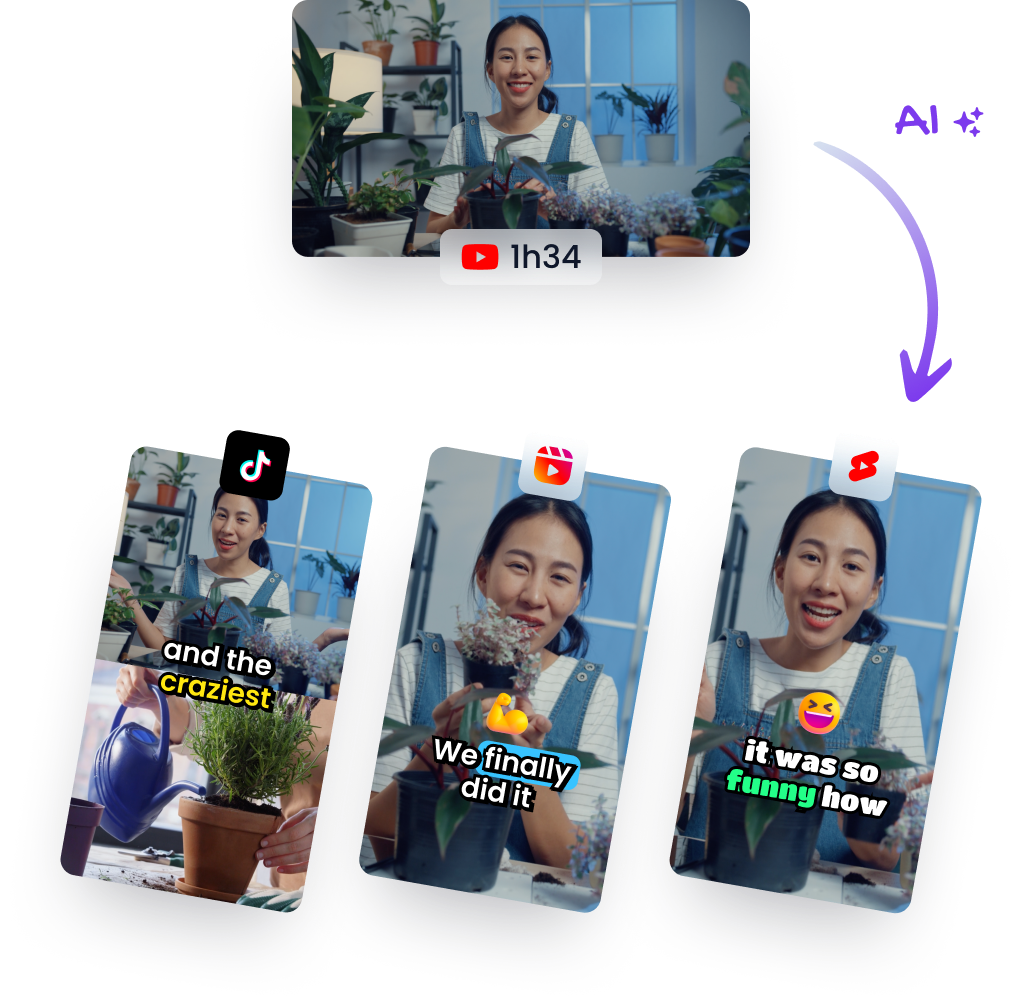
Let’s be honest, spending hours scrubbing through footage to find a few good moments for social media is a soul-crushing task. It's a massive bottleneck for anyone trying to keep up with the demands of today's platforms. The real cost isn't just the time you lose; it's the missed chances to connect with your audience while a topic is still hot. This is exactly why a growing number of creators are switching to tools that automatically cut video highlights, turning what was a full day's slog into a quick 10-minute review session.
Why Manual Video Editing Is Holding You Back
Staring at a timeline for hours, trying to pinpoint a few viral-worthy moments, is an outdated way to work. The content world moves at a blistering pace, and manual methods just can't keep up.
For every hour you spend manually hunting for clips, a competitor is already publishing, capturing your audience's attention. This isn't just about reclaiming your time; it’s about shifting your focus from tedious labor to high-impact strategy.
The fundamental issue is that manual editing is reactive. You finish a long recording—like a podcast or a webinar—and then the slow, painful hunt for gold begins. That workflow creates a significant delay, often 24 to 48 hours, between producing your main content and getting it onto fast-paced platforms like TikTok, Reels, and Shorts.

The Hidden Costs of Old-School Editing
The drag of manual editing goes way beyond your hourly rate. There are other costs that are much harder to measure but hit your bottom line even harder.
Think about it this way:
- Creative Burnout: How much creative energy do you have left for new ideas after spending a day on repetitive, mind-numbing tasks? For many, it's a total drain that stifles innovation.
- Inconsistent Output: When editing feels like a chore, you post less. It's that simple. Social media algorithms, which favor channels that post 3-5 times per week, reward consistency. A slow workflow actively sabotages your growth.
- Missed Viral Moments: It's shockingly easy to scroll right past a brilliant quote or a subtle reaction when you're manually reviewing hours of footage. AI, on the other hand, can analyze transcripts and audio cues to find gems you'd almost certainly miss.
When you look at the typical wedding videographer cost, which often includes hours of editing, you start to see the value. Automating highlight creation saves a significant chunk of that time and money. Instead of paying for hours of manual clip-hunting, you’re investing in a system that does it for you.
Actionable Insight: The biggest shift is from finding highlights to verifying them. AI serves up the best moments based on data; your job is just to give the final creative nod. This simple change completely transforms your entire content process.
A Smarter Way to Create Highlights
The modern approach isn't about replacing your creativity; it's about amplifying it. When you use tools to automatically cut video highlights, you let smart systems do the heavy lifting.
The AI scans your entire video, analyzes the transcript, identifies the key topics, and pinpoints the exact moments most likely to grab a viewer's attention.
This frees you up to do what you do best: refining the story, engaging with your community, and planning your next big project. It flips editing from a frustrating roadblock into a streamlined, almost effortless part of your strategy, helping you grow way faster.
What’s the Real Impact Here?
Let's cut through the noise and talk about what happens when you actually automatically cut video highlights using AI. This isn’t just about clawing back a few hours in your week; it’s about completely rewiring your content workflow to boost your bottom line and open up new growth opportunities.
Think about it. You’re taking a process that used to demand dozens of hours—or a hefty freelance budget—and letting a smart system handle the grunt work in minutes. This shift frees you and your team to stop doing repetitive labor and start focusing on high-value work like community building, brand deals, and big-picture strategy.
Unlocking a Measurable Return
The financial upside isn't just theoretical; it's incredibly clear. For every $1 invested in automation, businesses see an average return of $5.44. And this isn't some far-off payoff—around 55% of businesses that adopt these tools see a positive return on their investment within the first year.
With the marketing automation space expected to swell to $15.58 billion by 2030, it’s obvious where the industry is headed. If you’re curious, you can dig into these automation statistics to get the full story.
This powerful return comes from one simple change: turning a single long video into a dozen or more social media assets without multiplying your effort. That one podcast episode now becomes a full week's worth of TikToks, Reels, and Shorts, keeping your brand visible and your audience engaged.
Actionable Insight: When you automate the tedious work of clipping videos, you're not just saving time. You're building a scalable content machine that never runs out of fuel. That’s how you stay relevant on platforms that live and die by the algorithm.
From Manual Slog to Strategic Output
To really drive the point home, let’s look at the difference between the old way and the new way of making short-form content.
The table below breaks down the real-world impact of switching from manual editing to an automated workflow with a tool like Klap.
Manual vs Automated Highlight Creation
MetricManual EditingAutomated (with Klap)Impact
Time Investment
4-8 hours per long video
10-15 minutes for review
Frees up nearly a full workday per video
Content Output
2-3 clips per video
10-15+ clips per video
5x more content from the same source material
Cost
High (editor's salary or freelance fees)
Low (fixed subscription)
Drastically reduces content production costs
Consistency
Often sporadic, leading to burnout
Effortlessly consistent posting schedule
Keeps your brand top-of-mind with audiences
Discovery of Clips
Relies on human memory and luck
Data-driven identification of viral moments
Uncovers hidden gems you might have missed
As you can see, this isn't just a small improvement; it’s a complete overhaul.
When you automatically cut video highlights, you empower your team to focus on the creative and strategic work that actually moves the needle, while the AI handles the time-sucking tasks that used to hold you back.
So, How Do These AI Video Clippers Actually Work?
Alright, let's move from theory to practice. Using an AI tool to automatically cut video highlights isn't about replacing your creative instincts; it's about ditching the tedious parts of editing so you can focus on strategy. Think of it less like a robot editor and more like a super-fast assistant who preps everything for your final review.
Let's walk through what this actually looks like, from the moment you have a finished long-form video to a folder full of clips ready for TikTok, Reels, and Shorts.
It all starts with your source video. Most of these tools keep it simple: you can either drop in a link from YouTube or upload the video file straight from your computer. No complicated software installs, no confusing setup. You just give the AI your raw material.
Once your video is uploaded, the real magic begins. The AI isn't just chopping your video into random pieces. It's performing a deep-dive analysis, transcribing every word, figuring out who is speaking, and using natural language processing to understand the core topics being discussed. In short, it’s “watching” your video to find the golden nuggets—those moments most likely to get a reaction.
This flowchart breaks down how this kind of automation turns repetitive busywork into actual, measurable growth for your channel.

The big idea here is that the AI acts as a force multiplier. It takes the manual effort that used to produce one or two clips and scales it up, fueling your channel's growth without burning you out.
Getting the Best Clips Right Out of the Gate
While the tech is pretty smart on its own, you can do a few simple things to make sure the AI gives you top-tier results from the get-go. I like to think of it as giving a chef the best ingredients to work with.
First and foremost, audio quality is king. The AI leans heavily on the transcript to find the best moments. If your audio is clean and free of background noise or people talking over each other, you're going to get far more accurate and compelling clips. A clear voice track lets the system lock onto the key phrases, questions, and punchlines that make a clip shareable.
If you need to make small tweaks after the clips are generated, a good video trimmer can help you polish them up.
Beyond audio, many tools let you give the AI a little direction. This isn't about micromanaging, but about pointing it toward what you know works for your audience. For instance, you can often specify:
- Clip Duration: Aim for that 30-60 second sweet spot that works so well on most platforms.
- Key Topics: Got specific keywords or themes you want to highlight? Feed them to the AI.
- Speaker Focus: If you have a guest on your podcast, you can tell the AI to prioritize their soundbites.
Actionable Insight: The goal isn't to control every little detail, but to give the AI a clear brief. A few simple instructions upfront can save a ton of editing time later and help the system learn what kind of content you're looking for.
And this technology is moving fast. We're already seeing tools that do more than just cut clips; they can generate highlights in real-time, process audio in multiple languages, and even insert branding dynamically. These were all tasks that required a whole team not too long ago.
By understanding a little bit about what's going on "under the hood," you can collaborate with the AI much more effectively. If you want to see a great real-world example of this in action, check out a dedicated service like the Saucial AI video clipping platform. Tools like this are built from the ground up to make this entire process as intuitive as possible.
Refining Your Clips for Maximum Engagement

AI gives you a massive head start, but your unique creative touch is what turns a decent clip into a viral one. This is where human intuition and artificial intelligence really shine together.
The AI handles the grunt work of finding potential highlights, but you provide the final polish that makes each clip truly connect with your audience. This isn't about re-editing from scratch. It's about small, strategic tweaks that make a huge difference in how your content performs. Think of it as guiding the AI’s output to perfectly match your brand’s voice and style.
Tighten the Hook for Immediate Impact
Those first two seconds are everything. On platforms like TikTok and Reels, you have a split second to stop the scroll. While the AI is great at spotting an interesting segment, you might need to manually tighten the start to get straight to the action or the most powerful part of a sentence.
Sometimes, the best hook is hiding just a few frames before the AI’s suggested start. Don’t be afraid to trim a half-second of dead air or a filler word from the beginning. It’s a tiny change that can dramatically increase your watch time.
Actionable Insight: AI gets you 90% of the way there, but that final 10% is where your expertise shines. Small tweaks to the hook, captions, and framing are what separate generic clips from content that truly connects and converts.
Perfect Your Captions and Subtitles
AI transcription is shockingly accurate these days—often hitting over 95% accuracy with clear audio—but it’s not perfect. It can easily miss brand names, industry jargon, or the unique slang your community uses.
This is where a quick manual review is non-negotiable:
- Brand Voice: Does the capitalization match your style? The AI might write "ai," but your brand guide might demand "AI." These details matter.
- Clarity: Break up long sentences. Your viewers need to be able to read and understand the text at a glance while the video plays.
- Emphasis: Use the editor to bold, color, or animate keywords. This is a simple trick to guide the viewer’s attention and add some extra punch.
Spending a couple of minutes perfecting the text doesn't just improve clarity; it reinforces your brand's personality. If you want to streamline this, a dedicated subtitle generator can give you even more advanced styling options.
Master the Reframe
Most modern AI tools do a solid job of automatically reframing horizontal video for vertical platforms, usually by trying to keep the speaker centered. But let’s be honest, this "auto-tracking" can feel a bit rigid and robotic.
Here's your chance to add that human touch to the camerawork. Manually adjust the frame to create a more dynamic shot or to make sure an important slide or product isn’t awkwardly cut off. A well-framed video just feels more professional and keeps the viewer’s focus exactly where you want it. This is a critical final step when you automatically cut video highlights for different platforms.
How to Publish Your Clips for Viral Reach
Making a killer clip is a great start, but it's only half the job. A perfect highlight reel is pretty useless if no one ever sees it. This is where your publishing strategy comes in, and trust me, it’s just as crucial as the content itself.
This isn’t about just hitting "export" and crossing your fingers. It’s about being deliberate. You need to set up your AI-generated clips for maximum discovery and engagement before they ever go live. The whole game starts by thinking about where your clips are headed—TikTok, Instagram Reels, and YouTube Shorts all have their own unique vibes and audience expectations.
Optimizing Your Export Settings
Before you even start brainstorming captions or hashtags, you need to get your technical settings right. This is the stuff that ensures your video looks sharp and professional, which massively impacts how viewers perceive your content quality.
First up, aspect ratio. The gold standard for vertical video is 9:16, and while some AI tools might give you other options, it's best to stick to the native format for your target platform. This helps you avoid those weird black bars or having your content awkwardly cropped.
Next, let's talk brand consistency. Most modern tools that automatically cut video highlights give you control over the look and feel of your auto-generated captions. Take advantage of this.
- Font Selection: Pick a font that matches your brand's personality.
- Color Palette: Use your brand colors for the text and any highlights to create a look that’s instantly recognizable.
- Caption Style: Settle on a consistent animation or placement for your text.
Doing this creates a cohesive style across all your clips. As people scroll, they’ll immediately know the content is yours.
Crafting a Sustainable Posting Strategy
On social media, consistency is king. The algorithms love it, and your audience does too. A reliable posting schedule keeps people engaged and tells the platforms you're an active creator worth promoting. This is where automated clip generation really becomes a superpower.
Instead of constantly scrambling for the next thing to post, you can create an entire library of high-quality clips from a single long-form video. We have a whole guide on turning longer videos into engaging shorts that shows you how to build a content backlog using a YouTube to Shorts converter. This lets you plan your content calendar out for weeks, not just days.
Actionable Insight: Your goal should be to build a system, not just to create individual clips. A well-oiled publishing workflow turns one piece of pillar content into a steady stream of audience engagement that drives measurable growth.
This kind of workflow isn't just a niche trick; it's part of a huge shift in the industry. The global market for broadcast automation software—which includes all sorts of tools for processing and optimizing video—is expected to hit USD 7.3 billion by 2035. That growth is being fueled by the massive demand for more efficient ways to create content. You can dig into more details about this expanding market on Research Nester.
Finally, don’t forget to write compelling descriptions and use relevant hashtags. Your description is your chance to add extra context or a clear call to action. Hashtags are how platforms categorize your content and serve it up to new audiences who are likely to be interested. Combine smart automation with a thoughtful publishing plan, and you've built yourself a powerful engine for going viral.
Got Questions About AI Video Editing? We’ve Got Answers.
Jumping into AI-driven content creation is a different way of working, and it’s smart to get a feel for how these tools actually operate before you go all in. Let's break down some of the most common questions creators have when they first start looking for a way to automatically cut video highlights.
How Does the AI Know Which Parts Are Interesting?
This is the big one, and the answer is a pretty cool mix of different technologies. At its core, an AI video clipper doesn't just "watch" your video. It starts by analyzing the transcript using Natural Language Processing (NLP).
This lets the AI understand the conversation—it can spot key topics, identify when questions are being asked, and even pick up on moments with more emotional punch based on the words you use.
But the best tools don't stop there. They often layer on a virality score to see which subjects are already buzzing online. This data gets combined with other cues, like a change in speaker or a shift in tone, to pinpoint the exact segments that are most likely to pop off as short-form content.
Are the Automatically Generated Captions Actually Accurate?
Accuracy is a huge deal, and honestly, modern AI transcription has gotten incredibly good. For clear audio, you're often looking at over 95% accuracy. It’s not perfect, of course. Things like loud background noise, really strong accents, or people talking over each other can still cause a few hiccups.
Actionable Insight: The goal here isn't a flawless, hands-off result every single time. It's about letting the AI do 95% of the heavy lifting in seconds. You just spend a few minutes in a simple editor cleaning things up. That's still worlds faster than transcribing from scratch.
Think of the AI as your super-fast assistant who bangs out the first draft. Your job is just to give it a quick once-over, fixing any niche brand names or specific jargon the system might not recognize.
Can I Use This for Any Type of Long-Form Video?
For the best results, you'll want to feed it content where the spoken word is the star of the show. These tools really shine with dialogue-heavy formats, like:
- Podcasts and interviews
- Webinars and online courses
- Educational lectures and keynotes
- Product reviews and commentary videos
That's because the AI's main strategy for finding gold is by digging through the transcript. You can definitely try it on other videos like gaming streams or travel vlogs, but its ability to automatically cut video highlights might be less on-point if the best moments are purely visual instead of being driven by what's being said.
Ready to stop wasting time and start creating content at scale? Klap uses AI to turn your long-form videos into a library of viral-ready shorts in minutes. Try Klap for free and see how it transforms your workflow.