Boost with AI to clip YouTube videos: Create viral Shorts Quickly
Other
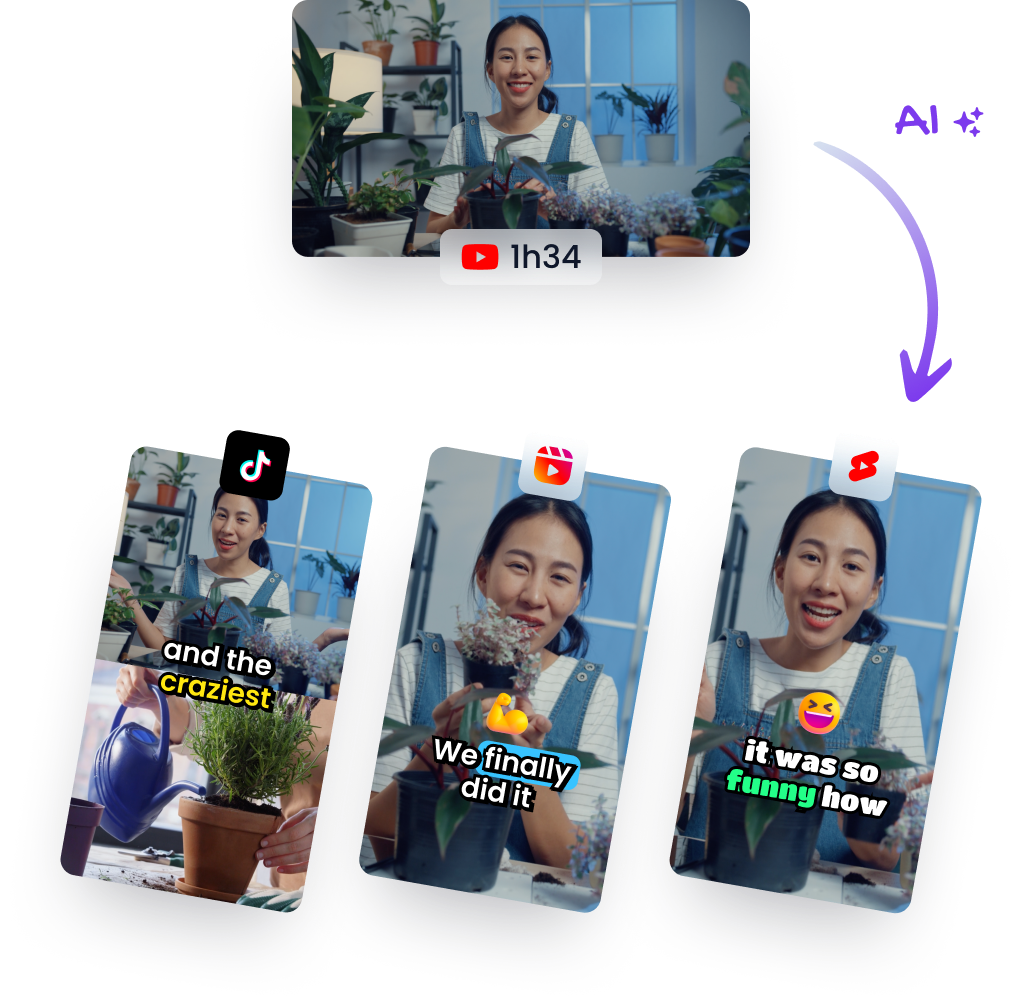
Imagine turning a single one-hour video into a week's worth of high-impact social media content. Not in a few days, but in minutes. That's the new reality for creators who are using AI to clip YouTube videos, and it's a massive strategic advantage that completely sidesteps hours of painful manual editing.
The New Era of Content Repurposing with AI
For most creators, the real bottleneck isn’t coming up with ideas—it’s the soul-crushing post-production work that comes after. Manually scrubbing through an hour-long podcast just to find a few shareable moments can burn an entire afternoon. This is exactly where AI changes the game.
Instead of you hunting for gold, the AI acts as your dedicated editor. It digs through your content, analyzing it for moments that actually matter. It looks for actionable signals like:
- Emotional Peaks: The AI can detect changes in your tone, moments of laughter, or spikes in energy that signal something interesting is happening.
- Key Takeaways: It identifies when you’re summarizing a critical point or dropping a valuable piece of advice.
- Viral-Worthy Segments: It’s smart enough to recognize question-and-answer exchanges or those strong, quotable statements that are perfect for social media.
This shift is huge. You stop being a video trimmer and start acting like a creative director, pouring your energy into strategy and big ideas instead of getting bogged down in tedious tasks.
Boosting Your Content Output and Reach
Using AI to clip your videos isn't just about moving faster; it’s about massively expanding your digital footprint. When you automate the creation of shorts, you can consistently feed platforms like TikTok, Instagram Reels, and YouTube Shorts with fresh, engaging content. That consistency is exactly what you need to reach totally new audiences who live on short-form video.
The impact here isn't just a hunch; the numbers back it up. A whopping 77% of available video editing applications have integrated AI-driven automation, dramatically slashing production time across the board. You can even see this trend in advertising, where nearly 58% of YouTube ads are either AI-generated or customized with these tools, pushing faster turnarounds for creators and marketers. If you want to dive deeper, you can explore more about these video editing trends to get the full picture.
The real magic of AI clipping is how it unlocks the hidden value in your existing content. That two-hour interview you did last year? It could be sitting on ten viral clips you just never had the time to find—until now.
Ultimately, this approach creates a powerful content engine. A single long-form video becomes the fuel for a dozen pieces of micro-content, each one optimized for a different platform. You maximize your reach and engagement without draining your most valuable resource: your time.
Finding the Right AI Clipping Tool for Your Content
Picking the best AI tool to clip your YouTube videos isn't about finding the one with the longest feature list. It’s about finding the one that actually gets your content. The perfect tool has to align with your specific style, your audience, and your workflow.
What works for a high-energy gaming channel will almost certainly fall flat for a thoughtful, dialogue-heavy podcast. It's the small details that make all the difference.
For instance, a gaming creator needs an AI that’s brilliant at spotting action-packed moments and visual highlights. A podcast host, on the other hand, needs an AI with killer speaker detection and near-perfect transcriptions to pull out the best conversational gems.
Differentiating Features That Matter
As you start comparing platforms, a few key features can be total game-changers for your daily grind.
Keep an eye out for tools that offer a "virality score" or a similar predictive metric. This is where the AI analyzes the generated clips and flags the ones it thinks have the best shot at performing well. It’s a massive time-saver, letting you focus your energy on publishing your strongest content first.
Multi-language support is another big one. If you have a global audience—or want one—a tool that provides accurate auto-captions in multiple languages is non-negotiable. This isn’t just about accessibility; it's about unlocking discoverability in entirely new regions.
Finally, think about customization. The ability to create and save branded templates for your captions, fonts, and logos ensures every clip you post looks and feels like it came from you, maintaining that hard-earned brand consistency.
This is the fundamental choice every creator faces: sink countless hours into manual editing or let an AI handle the heavy lifting.

As the diagram shows, if scaling your output without burning out is the goal, embracing AI is the smartest path forward.
Comparing Top AI Tools to Clip YouTube Videos
The market for AI clipping tools is getting crowded, with each platform bringing something unique to the table. A side-by-side look at the leading options can help clarify which one truly fits your needs.
ToolBest ForKey FeaturePricing Model
Klap
Podcasts, interviews, educational content
AI curation that finds the most engaging topics
Tiered subscription
Opus Clip
Fast-paced, single-speaker videos
"Virality Score" to predict clip performance
Tiered subscription
VEED.io
All-in-one editing and clipping
Full-suite video editor with AI features
Freemium & subscription
Descript
Creators who prioritize transcript accuracy
Text-based video editing ("edit video like a doc")
Freemium & subscription
While this table gives you a quick overview, the real test is seeing how these tools handle your specific content. What works on paper might not deliver the results you're looking for in practice.
The best tools today do more than just chop up a video. They use a sophisticated mix of signals—like face detection, shifts in voice tone, and conversational cues—to pinpoint genuinely compelling moments. This is what leads to smooth, watchable clips that don't have those awkward, jarring cuts.
Many of these top-tier platforms also offer auto-captioning in over 98 languages with over 97% accuracy, making it incredibly simple to repurpose your content for a worldwide audience.
The best tool for you is the one that understands the unique DNA of your content. Take advantage of free trials to test the same long-form video on multiple platforms and compare the quality of the clips they generate.
For example, you might find that while Klap excels at pulling killer insights from interviews, another tool might be a better match for your comedy sketches. That’s why hands-on testing is so crucial.
If you're weighing your options, direct comparisons are your best friend. To see how two of the biggest players measure up, check out our deep dive on Klap versus Opus Clip alternatives. This kind of breakdown helps you move past the marketing hype and choose a platform that will become a true asset to your workflow.
Your Practical Guide to Creating AI-Powered Clips
Alright, let's move from theory to action. Understanding how an AI works is one thing, but seeing it chop up your own content in real-time? That’s where the magic happens. This guide will walk you through the whole process, using a real example to show you just how easy it is to get started.
The first step is almost laughably simple. Most modern tools, like Klap, just need a YouTube link. You grab the URL of the long-form video you want to repurpose, paste it into the tool, and you’re off. No more downloading huge video files or wrestling with clunky uploads—the AI does all the heavy lifting right from the source.
Once you feed it the link, the AI gets to work. This usually takes a few minutes while the system transcribes the entire video, figures out what you're talking about, and pinpoints the segments with the best shot at grabbing attention. It’s actively listening for hooks, questions, and powerful statements that can stand on their own as a killer short clip.

Refining Your AI-Generated Clips
After the analysis wraps up, you’ll get a dashboard loaded with suggested clips—usually anywhere from 10 to 20 options from a single hour-long video. This is where your human touch comes in. The AI gives you an incredible head start, but you're the one who gives each clip the final sign-off.
The first thing to do is just watch the suggestions. As you go through each one, ask yourself a few simple questions:
- Does this have a strong, clear hook in the first three seconds?
- Does it tell a complete mini-story or deliver one solid, punchy idea?
- Is the ending clean, or does it feel like it cuts off mid-thought?
This review process is incredibly quick. Instead of scrubbing through an hour of footage looking for gold, you're just vetting a dozen or so pre-selected moments. For a deeper look at this workflow, our guide on using a dedicated YouTube to Shorts converter has some extra tips.
Mastering the Fine-Tuning Process
Look, even the smartest AI isn't going to get every single detail right. The most common tweak you'll make is adjusting the start and end points of a clip. Sometimes, adding just a single second to the beginning provides the context needed to make the hook land perfectly.
For example, the AI might grab a clip starting with, "That's why it's so important..." A much better version might start three seconds earlier with the question that led to that statement. A quick drag of the timeline editor is all it takes to fix this and dramatically boost the clip's impact.
Another crucial step is cleaning up the auto-generated captions. While transcription accuracy is shockingly good these days—often over 97%—it's not perfect. You’ll want to quickly scan for misspelled names, weird jargon, or clunky phrasing. This is also your chance to inject your brand's voice by tweaking punctuation or breaking up longer sentences so they're easier to read on a phone.
Think of the AI as your incredibly fast assistant editor. It does 90% of the repetitive work, freeing you up to focus on the final 10% of creative polish that makes a clip truly shine.
Finally, give the layout a quick once-over. Most tools will automatically reframe your 16:9 horizontal video into a 9:16 vertical format, and they use face detection to keep the speaker centered. You can usually choose different layouts, like a split-screen for interviews or a clean full-screen view. Just make sure the most important visual elements are still in the frame, and you’ll have a polished, professional-looking short ready to go.
From Good to Great: Optimizing Your AI Clips

Let's be real: using an AI to clip YouTube videos gets you an astonishing 90% of the way to a finished short. It’s a massive head start.
But that final 10%? That’s where your human insight turns a decent clip into a viral one. This is the part where you stop just using a tool and start collaborating with it.
The first three seconds are everything. That's all the time you get before a viewer decides to keep watching or swipe away. While the AI is great at spotting key moments, it doesn't always frame them with a hook strong enough for a short-form audience. Sometimes, the most powerful thing you can do is add a simple, bold text overlay that poses a question or makes a provocative statement. It’s a game-changer.
Uncovering Hidden Gems in the Transcript
Never skip a quick scan of the full transcript. Seriously. The AI is trained to find obvious patterns—shifts in tone, clear statements, moments of high energy. But it can easily miss the quiet power of a single, impactful quote buried in a longer sentence.
Spending just five minutes reading the text can reveal these hidden gems. You might spot a profound one-liner or a funny aside the algorithm completely overlooked. This manual check is your secret weapon, letting you pull unique moments that others relying purely on automation will always miss.
A Data-Driven Approach to Clip Performance
Your job isn't done when you hit "publish." The real growth happens when you learn what your audience loves and feed that intel back into your strategy. This is where A/B testing, even on a small scale, is your best friend.
Here’s an actionable way to do it:
- Create Two Versions: Take the same AI-generated clip. For TikTok, give it a title that leans into a trending sound or challenge.
- Test on Another Platform: For YouTube Shorts, write a more descriptive, search-friendly title for that exact same clip.
- Analyze the Results: Check back in a few days. Did the trend-focused title pop off immediately on TikTok? Did the keyword-rich title gain more views over time on YouTube Shorts?
This simple testing process gives you concrete data on what hooks work best for different audiences. You're no longer guessing; you're making informed decisions that improve the performance of every future clip.
This feedback loop is crucial. By understanding which topics, formats, and headlines connect, you can give the AI smarter instructions for your next batch of content. If you want to dive deeper into boosting performance, exploring various AI optimization techniques can really elevate your content's impact.
And don't forget the captions—they're vital for accessibility and engagement. For a detailed walkthrough, check out our guide on how to add captions to YouTube Shorts.
A Smart Distribution Strategy for Your Viral Clips
Okay, so you’ve got a folder full of killer shorts ready to go. Great start, but that's only half the job. A brilliant clip is totally useless if it never finds the right audience, which is why you absolutely need a smart, platform-aware distribution plan.
Just posting the exact same video with the same caption across TikTok, Reels, and Shorts is a recipe for disappointment. It simply doesn't work.
Each platform has its own algorithm, its own culture, and its own audience expectations. What explodes on TikTok might completely flop on YouTube Shorts, and what works on Reels could get ignored everywhere else. You have to tailor your approach.
Know the Room: Tailoring Clips for Each Platform
Think of it like this: each social media app is a different party. You wouldn't wear the same thing or talk the same way at a backyard barbecue as you would at a formal wedding. You've got to read the room.
- TikTok: This is all about speed, trends, and sounds. The strategy here is to jump on trending audio, use hashtags that are both relevant and a little bit weird, and keep your captions super short and punchy.
- Instagram Reels: Reels tends to reward higher-quality visuals and content that feels a bit more polished, inspirational, or educational. Clean aesthetics, slightly longer captions that add value, and a well-curated set of hashtags usually do the trick.
- YouTube Shorts: This is the interesting one because search intent is a huge factor. Unlike the others, Shorts are baked right into the massive YouTube search engine. That means your titles and descriptions need to be optimized with keywords, just like you would for your long-form videos.
For example, say you have a great clip about a productivity hack. On TikTok, you might pair it with a trending meme sound. For Instagram, you'd give it a clean look and a caption that lists three key takeaways. On YouTube Shorts, the title would be something direct and searchable like, "The Best Productivity Hack I've Learned This Year."
YouTube Shorts: Your Secret Weapon for Channel Growth
If you're trying to grow a YouTube channel, focusing on Shorts is a no-brainer. The platform has absolutely exploded, now reaching over 2.3 billion monthly active users who generate more than 70 billion daily views. It's a massive opportunity.
For creators, this is a direct pipeline for new subscribers. The data is clear: Shorts can have a much higher subscriber conversion rate. Some studies show an average of 16.9 new subscribers for every 10,000 Shorts views, which blows traditional long-form video out of the water.
This makes it an essential piece of the puzzle when you use ai to clip youtube videos. Every single Short acts as an ad for your main channel, funneling engaged viewers directly to your longer content.
A Sustainable Posting Schedule You Can Actually Stick To
Consistency will always beat random bursts of activity. Don't just dump all your new clips online at once—space them out. A single one-hour video can easily give you enough content for two full weeks.
Here’s a simple schedule that works wonders:
DayActionPlatform Focus
Mon
Post Clip #1
YouTube Shorts & TikTok
Tue
Post Clip #2
Instagram Reels
Wed
Post Clip #3
YouTube Shorts
Thu
Post Clip #4
TikTok & Instagram Reels
Fri
Post Clip #5
YouTube Shorts
Following a rhythm like this keeps you consistently in front of your audience on every key platform without burning yourself out. To really get the most out of your AI-powered clips, you need the right tools in your corner. Exploring some proven Social Media Content Creation Tools can make a huge difference in getting your clips seen.
Your Top Questions About AI Video Clipping, Answered
Jumping into AI-powered content creation is exciting, but it definitely brings up some questions. It's smart to get a handle on things like monetization, copyright, and how much control you really have before you dive in.
Let's clear up the most common questions creators have when they start using AI to clip their YouTube videos. Getting these answers straight will help you move forward with confidence and sidestep those rookie mistakes.
Will Using AI Get My Channel Demonetized?
No, not at all. Using an AI tool to repurpose your own original content doesn't break any of YouTube's monetization policies. Think of it this way: you're just repackaging your own work for a different format and a new audience. The content is still yours, through and through.
The real thing to watch out for is copyrighted music. A license you secured for a track in your long-form video probably doesn't cover new uploads on TikTok or Instagram Reels. Your safest bet is to always use royalty-free music or tap into each platform's native audio library for your short clips.
Can I Actually Control What the AI Picks?
Absolutely. You have a ton of influence over the AI's choices, and guiding it is the key to getting great results.
Most good tools let you give the AI some direction before it starts processing. You can feed it keywords or themes to focus on, like "find all the funny moments" or "pull out the key takeaways." This gives the AI a clear roadmap to follow.
But your real power comes in during the review stage. The AI serves up a fantastic first draft, but it's your unique context and deep understanding of your audience that will polish the final clip to perfection. Use the AI's suggestions as a launchpad, not the final word.
This human-in-the-loop workflow is what separates the good clips from the truly great ones.
Is It Okay to Clip Videos I Don't Own?
This is a hard no. Using these tools to clip and republish someone else's content is a direct violation of copyright law. It also goes against the terms of service for YouTube and every other major social media platform out there.
These AI tools are designed for one specific purpose: to help you, the creator, repurpose your own original long-form videos. Trying to use them on another creator's work is a fast track to content takedowns, channel strikes, and maybe even legal trouble. Stick to your own stuff.
Ready to turn your long-form videos into a steady stream of viral shorts? With Klap, you can generate dozens of social-ready clips in minutes, not hours. Start repurposing your content the smart way at https://klap.app.