Your Guide to Using an AI Clip Generator From YouTube
Other
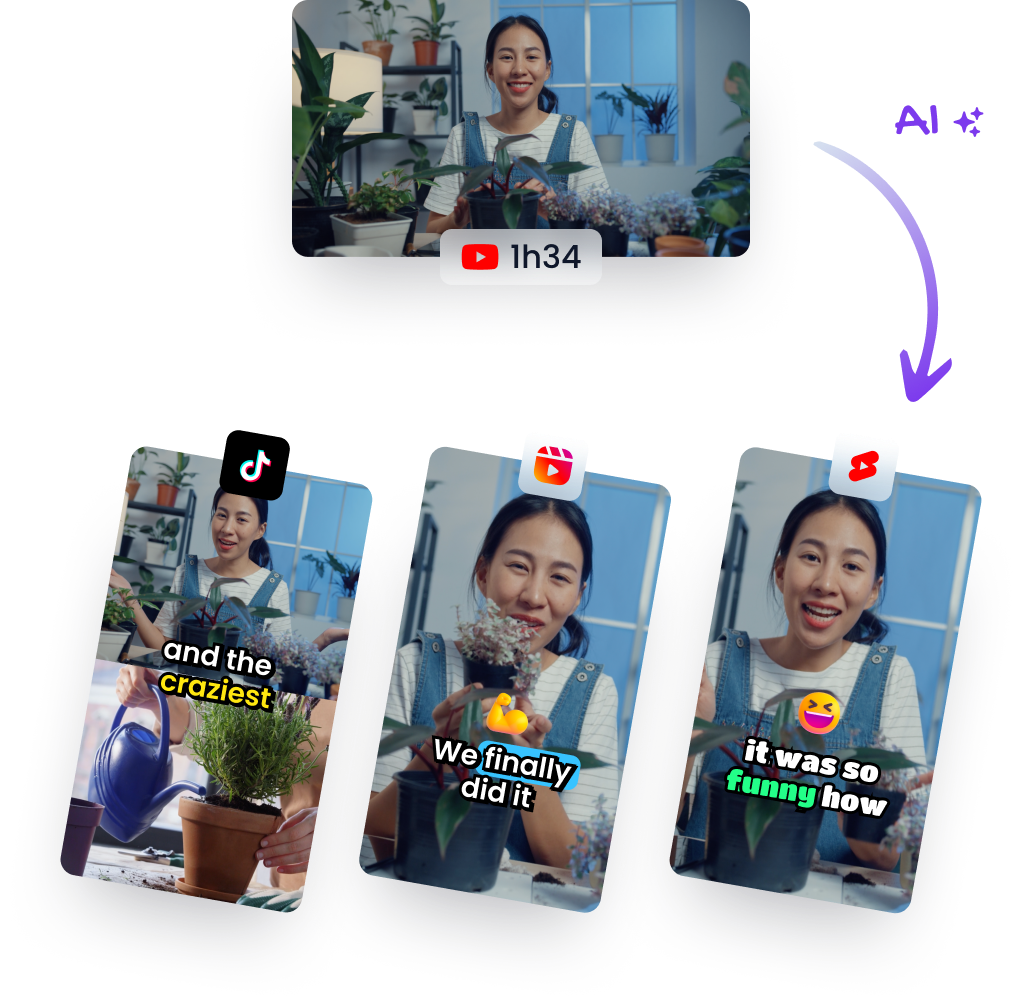
An AI clip generator is a tool that digs through your long YouTube videos, automatically finds the most engaging parts, and turns them into short, vertical clips ready for social media. In simple terms, it saves creators countless hours of manual editing, making it much easier to repurpose existing content for platforms like TikTok, Instagram Reels, and YouTube Shorts.
Why AI Clip Generators Are Such a Big Deal
Keeping up with the relentless demand for short-form content can feel like a full-time job. You might spend weeks producing a high-quality, long-form YouTube video, only for it to be consumed and quickly forgotten. The real challenge is feeding the content machines of TikTok, Instagram Reels, and YouTube Shorts, which need a constant stream of fresh, engaging clips.
This is where an AI clip generator from YouTube completely changes the game.
For most creators and marketers, manually scrubbing through hours of footage to find a few viral-worthy moments is just not sustainable. It’s incredibly time-consuming and often requires a dedicated editor, adding significant costs and production delays. AI clipping tools solve this by acting as a smart assistant that never gets tired.
So, How Does the AI Find Those Viral Moments?
These tools don’t just randomly chop up your video. They use a pretty sophisticated mix of techniques to pinpoint segments with the highest potential to grab attention.
Here’s a look under the hood:
- Transcript Analysis: The AI scans every word of your video's dialogue. It looks for keywords, questions, and moments of high emotion or topic changes that signal something important is happening.
- Visual Cues: It also watches the video, detecting changes in on-screen action, who's speaking, and overall visual energy to identify the most dynamic scenes.
- Engagement Data: Some of the smarter platforms even analyze patterns from millions of successful short-form videos to predict what kind of content is most likely to perform well on social feeds.
This image shows just how deeply AI is being woven into the video creation process, automating complex tasks that once took a ton of manual effort.

By taking over tasks like scene detection and object tracking, the AI can intelligently isolate the best parts of a video without a human needing to click a single button. This shift allows you to multiply your content output without blowing up your workload or hiring a huge team.
The real benefit here is efficiency. You can turn one 30-minute podcast episode into 10 or 15 high-quality social clips in the time it used to take to manually find and edit just one.
This massive leap in efficiency is fueling a huge market boom. The global AI video editing market is on track to grow from $0.9 billion in 2023 to $4.4 billion by 2033. More importantly, businesses are already seeing real financial benefits, with some studies showing 63% reporting a 58% reduction in production costs compared to old-school methods. You can dig deeper into these kinds of video editing statistics to see how the industry is changing.
Manual vs AI Clipping Time and Cost Savings
To put this into perspective, let's compare the traditional manual process to an AI-powered one for a single 30-minute YouTube video. The difference in time, effort, and cost is staggering.
TaskManual Clipping (Average Time/Cost)AI Clip Generator (Average Time/Cost)Efficiency Gain
Finding Clips
1-2 hours of scrubbing and note-taking.
5-10 minutes of AI analysis.
~95% time reduction.
Editing & Reframing
3-4 hours of trimming, resizing, and keyframing.
15-20 minutes for AI auto-reframing & review.
~90% time reduction.
Captioning
30-45 minutes for transcription and syncing.
2-3 minutes for AI-generated captions.
~95% time reduction.
Total Time
4.5 - 6.5 hours
22 - 33 minutes
Over 10x faster.
Estimated Cost
$100 - $250 (freelance editor)
$1 - $5 (per video on a subscription plan)
Over 95% cost savings.
The numbers speak for themselves. The move to an AI workflow isn't just about saving a little time—it's about completely transforming your content production capabilities.
Ultimately, this technology lets you work smarter, not harder, unlocking all the hidden value buried in your existing long-form content.
How to Choose the Right AI Clipping Tool
With a ton of new tools popping up, picking the best AI clip generator from YouTube can feel overwhelming. A lot of them look the same at first glance, but the technology running in the background and the features they offer can be wildly different. That difference directly impacts how good your final social media clips will be.
Making the right call really just comes down to knowing what to look for.
The absolute most important thing to check is the quality of the AI's clip selection. A great tool doesn't just slice up your video randomly; it actually understands what makes a moment go viral. The best AI clippers out there, like Reap, OpusClip, and Submagic, use a mix of signals—facial recognition, shifts in voice tone, and even analyzing speech cues—to pull out the most compelling moments automatically. When you’re testing a tool, see how good its suggestions are right away. You can find more details on how the top AI clipping tools of 2025 compare to each other.
Core Features That Actually Drive Results
Beyond just finding good moments, a few key features separate the okay tools from the truly great ones. As you compare your options, make sure the platform delivers on these fronts:
- Transcription and Captioning Accuracy: Nothing kills a video's vibe faster than bad captions. The best tools give you nearly perfect transcriptions and generate stylish, animated captions that are actually fun to read. Some platforms even offer support for over 98 languages at greater than 97% accuracy.
- Virality Scoring: This feature is a total game-changer. Some AIs will analyze your clips and give them a "virality score" based on data from millions of other successful videos. It takes the guesswork out of your content strategy and helps you decide which clips are most likely to pop off.
- Automatic Reframing: Your horizontal YouTube video has to look perfect when it's vertical on a phone. A good tool will automatically track the main speaker or the action, keeping them perfectly centered in that 9:16 frame. This saves you so much time you'd otherwise spend manually adjusting keyframes.
Match the Tool to Your Content
The right tool for you also depends heavily on the kind of content you make. Not every AI clip generator is built the same, and some are just better for certain niches.
For instance, if you're a podcaster or run an interview show, you’ll want a tool with solid speaker detection. This feature can automatically tell who's talking and shift the focus, which makes your clips look much more dynamic and professional. On the other hand, if you're a gamer, you need a tool that’s great at spotting high-action moments, not just dialogue. It's also worth checking out our guide on alternatives to popular tools like Opus Clip to find one that's a better fit for what you do.
The goal is to find a tool that understands the context of your content, not just the words being said. A platform that can distinguish between a thoughtful monologue and an exciting gameplay highlight will give you far better results.
Finally, think about pricing. Some services charge you per video or per minute of footage, which might be fine if you only post occasionally. But for most creators who are active, a subscription that gives you unlimited video processing is usually a much better value. Always take advantage of the free trials to get a feel for the workflow and make sure it clicks with your production style before you pull out your wallet.
Creating Your First AI-Powered Video Clip
Alright, let's move from theory to practice. Actually getting started with an AI clip generator from YouTube is a lot less intimidating than it sounds. These tools put some serious editing power right at your fingertips, even if you’ve never touched video software in your life. The whole point is to be intuitive, letting you turn a massive video into a bunch of social-ready clips in just a few minutes.
The process usually kicks off by just feeding the tool your long-form video. Most platforms, like Klap, give you two simple options: paste a YouTube link or upload a video file directly. Once you've done that, the AI starts its magic, scanning your content to pinpoint the most promising hooks and shareable moments.
Reviewing What the AI Finds
After a few minutes, the tool will serve up a platter of short clips it thinks will work. This is where you really see what the AI is capable of. Most of the time, each suggestion comes with a "virality score" or something similar. This is basically the AI's best guess on how well that little segment will do on social media, based on its analysis of things like pacing, keywords, and what's already performing well out there.
Now, don't just take the AI's word for it. Your role here is to be the human expert, the final check. Watch each clip and ask yourself a few questions:
- Does it actually grab you in the first three seconds?
- Is the point of the clip crystal clear?
- Does it have a clean beginning and a satisfying end?
This is the kind of decision-making process the AI runs through—checking for accuracy, predicting virality, and sorting out the reframing—to get you the best possible starting points.

As you can see, the AI is juggling technical stuff (like transcript accuracy) with engagement potential (virality) and platform readiness (reframing) to deliver clips that are ready to go.
Making Edits That Matter
Tiny tweaks can make a world of difference. Most AI clip generators have a dead-simple editor that lets you make crucial changes without needing a film degree. One of the most powerful edits you can make? Tightening up the start and end of the clip. Trimming just half a second of dead air from the beginning can make your hook so much punchier and stop people from scrolling past.
This is also where you get to stamp your brand's personality all over the content. Tweak the AI-generated captions by changing the font, color, or animation style to match your brand guide. Throw in some relevant emojis to add emphasis or use a B-roll feature to drop in stock footage that adds some visual flair. For a deeper look at the possibilities, there are even specialized tools for converting YouTube content directly into Shorts that offer even more advanced options.
Exporting for Maximum Impact
Once you've polished your clip and are happy with it, the last step is to get it out into the world. A good AI tool will have export settings built specifically for TikTok, Instagram Reels, and YouTube Shorts. This is huge—it means your video will be rendered in the perfect 9:16 aspect ratio, resolution, and format, so you don't have to worry about weird cropping or quality drops when you upload. Just pick the preset you need, download the file, and you're ready to share.
Get Your Clips Seen: How to Optimize for Maximum Social Reach

So you've used an ai clip generator from youtube to create a killer clip. That’s a huge first step, but the real work begins when you hit "publish." You can't just toss the same video onto every platform and expect it to work. That one-size-fits-all approach is a recipe for low engagement.
To really win, you need to play by each platform's rules. TikTok's algorithm eats up fast-paced, trendy content. Instagram Reels leans more toward visually polished, almost aesthetic clips. And YouTube Shorts? It’s a beast of its own, tapping into your existing channel authority to funnel viewers back to your long-form videos.
Considering Shorts now has over 2 billion monthly logged-in users and pulls in more than 70 billion daily views, you can't afford to ignore it. Each platform has a unique vibe, and tailoring your clips is non-negotiable.
Nail the Hook in the First 3 Seconds
On social media, you have a fraction of a second to stop someone from scrolling. This is where your hook comes in, and dynamic, animated captions are your best friend. The AI gives you a great starting point, but it's up to you to add the finishing touches that make it pop.
Your goal is to create a hook that’s both visual and textual. Don't just accept the default caption style. Jump in there and customize it. Use your brand colors, switch to a bolder font, or strategically place emojis to emphasize key words. If your hook is a question, make that text impossible to miss from the second the video starts. For some great tools and ideas on this, check out our guide on using a subtitle generator.
I see so many creators let the AI-generated captions stay generic. It’s a missed opportunity. Spend an extra 30 seconds customizing them. Just bolding one keyword or adding a single relevant emoji can make a huge difference in holding attention.
That tiny bit of effort signals to the algorithm that your content is engaging, which can get it pushed out to a much wider audience.
Write Captions and Hashtags That Actually Work
Once you've got the visual hook locked down, it's time to focus on your caption and hashtags. These are crucial for discovery. Avoid just stuffing them with keywords; you need to write something that adds to the video.
Here’s a simple formula that works every time for descriptions:
- The Hook: Kick things off with a question or a bold statement that mirrors the video's core message.
- The Context: Give a quick one-liner about what the clip covers or the problem it solves.
- The Call-to-Action (CTA): Tell people exactly what to do next. "Watch the full video on my channel (link in bio)!" is a classic for a reason.
When it comes to hashtags, think in layers. Start broad with high-traffic tags like #contentcreation, then get more specific with niche tags like #videopodcasttips. This strategy helps you cast a wide net while also connecting with a highly targeted and engaged community. By combining great clips with actionable social media engagement strategies, you'll create a repeatable system for growth.
Platform-Specific Optimization Checklist
To make things even clearer, here's a quick cheat sheet for optimizing your clips for the big three short-form video platforms.
Optimization ElementTikTokInstagram ReelsYouTube Shorts
Ideal Length
7-15 seconds
15-30 seconds
Under 60 seconds
Audio Strategy
Use trending sounds immediately
Use trending audio, but licensed music is also popular
Use Shorts Audio Library or original audio
Caption Style
Short, punchy, often part of the on-screen text
More descriptive, can include storytelling
Brief and to the point, focused on keywords
Hashtag Use
3-5 highly relevant, trending tags
5-10 tags mixing broad and niche
2-4 broad keywords, treated like video tags
Visual Hook
Fast cuts, immediate on-screen text
High-quality visuals, aesthetic appeal
Clear value proposition or question
Call-to-Action
"Link in bio," "Follow for Part 2"
"Save this," "Share with a friend," "Link in bio"
"Subscribe," "Watch the full video"
Remember, this checklist is a starting point. The best way to find out what works for your audience is to test, measure, and adapt.
Don’t Make These Common Repurposing Mistakes
An AI clip generator is a huge time-saver, but if you just hit "export" and post without a second thought, you're setting yourself up for failure. Relying on the AI blindly can make your brand look amateurish.
Beyond the obvious stuff, a few subtle mistakes can completely kill your clip's performance before anyone even sees it.
One of the biggest blunders is choosing clips that have zero context. That amazing one-liner from your hour-long podcast? It might mean nothing to a new viewer who didn't hear the 10 minutes of conversation that came before it. The AI is smart, but it doesn't always get the story. Always ask yourself: “Does this make sense all by itself?”
Another classic mistake is leaving in choppy, awkward cuts. The AI does a pretty good job of finding a clean entry and exit point, but sometimes it just feels… off. A clip that cuts off mid-laugh or ends right before a key reaction feels unprofessional and leaves people confused. This is usually an easy fix—a quick manual trim of a second or two is all it takes.
You're Forgetting the Whole Point
Technical edits aside, too many creators just export their clip and throw it online without thinking about what they want the viewer to do next. Every single clip needs a purpose, and that almost always means adding a clear call-to-action (CTA). Without one, your clip is a dead end.
You have to tell your audience what the next step is:
- "Watch the full video on our channel!"
- "What do you think? Let me know in the comments."
- "Follow for more tips like this."
A clip without a CTA is a massive missed opportunity to grow your audience or send traffic back to your main channel. It's the difference between someone watching passively and actually becoming part of your community.
The goal isn't just to get views; it's to build a bridge. Each short clip should be a signpost pointing viewers toward your deeper, more valuable long-form videos, turning a fleeting glance into a potential subscriber.
Don't Skip the Final Polish
Finally, never, ever skip the final review—especially for the AI-generated captions. While the tech has gotten incredibly good, often hitting over 97% accuracy, it’s not flawless.
One single mistranscribed word can torpedo the meaning of an entire sentence, leading to some seriously embarrassing (and brand-damaging) mistakes.
Think of the AI as your incredibly efficient assistant, not the final decision-maker. It’s your job to be the quality control expert, making sure every clip lives up to the standard you set with your original YouTube video. That’s how you keep your brand consistent and build real trust with your audience, no matter where they find you.
Navigating Copyright and Fair Use Rules
Before you jump in and start making clips, we need to have a serious talk about the legal stuff. An ai clip generator from youtube is an amazing tool for repurposing content, but there's one golden rule you absolutely cannot break: only use it on your own original videos.
Just because the technology can pull from any public YouTube link doesn't mean you have the legal right to do so. Grabbing clips from another creator's hard work without their direct permission is a recipe for disaster.
Think copyright strikes against your channel, losing your monetization, or even getting your entire channel shut down. Beyond that, the original creator could pursue legal action. It's a massive risk that just isn't worth it for a few seconds of someone else's content.
Why Fair Use Probably Doesn't Apply
I see this a lot—creators think they're covered by "Fair Use." While Fair Use does let you use copyrighted material without permission in very specific cases like commentary, criticism, or news reporting, it's an incredibly tricky legal defense.
The hard truth is that most clips you create for marketing on TikTok, Reels, or Shorts won't qualify. Courts look at four main factors, and marketing content usually falls short on a few key points:
- Purpose and Character: If you're using clips to promote your brand or sell something, it's commercial. That weighs heavily against a fair use claim.
- Amount Used: Even a short clip can be seen as the "heart" of the original work, which means you've taken something substantial.
- Effect on the Market: Could your clip stop someone from watching the original video or hurt the creator's ability to make money from it? If so, it’s not likely to be considered fair use.
The safest, simplest, and most ethical way to think about it is this: an AI clip generator is a tool to amplify your voice, not someone else's. This mindset protects you and respects the work of other creators.
It's also smart to understand how copyright is enforced. To get a better handle on the legal side of content protection, you can explore the DMCA Takedown process. Knowing this helps you protect your own work and understand the serious consequences of using others'.
By sticking to your own library of videos, you can use AI clipping tools to their full potential without looking over your shoulder. You'll be building your brand on a solid, legal foundation.
Got Questions? We've Got Answers
Jumping into the world of AI clip generators can bring up a few questions. It’s a new way of working, after all. Here are some of the most common things creators ask when they start turning their YouTube videos into social clips.
Can I Really Use This on Any YouTube Video?
This is a big one. While the tech can slurp up almost any public YouTube link you throw at it, you should only be using these tools on videos you own.
Using an AI clip generator on another creator’s work without their explicit permission is a surefire way to get a copyright strike. It can lead to your clips getting taken down, penalties against your channel, or even legal trouble with the original creator.
Think of it this way: the goal is to repurpose your own library of long-form content, not someone else's.
How Does the AI Know Which Parts Are Good?
It's not just randomly slicing up your video—there's a lot going on under the hood. The AI is trained to think like a savvy social media editor who has seen millions of viral clips.
It performs a few key tasks all at once:
- It scans the entire transcript, looking for keywords, questions, and emotionally charged language that usually signal a powerful moment.
- At the same time, it’s analyzing audio and visual cues—things like changes in your tone of voice, laughter, facial expressions, and even the beat of the music.
- The best tools go a step further and predict "virality" by matching patterns in your video to what's currently performing well on social media. They’ll even give each clip a score based on its potential to get traction.
It's like having a super-fast editor who has watched every viral video on the internet and knows exactly what patterns to look for in your content. It combines language understanding with visual analysis to make its picks.
So, Do I Still Need to Be a Video Editor?
Nope, and that's the whole point. An AI clip generator from YouTube is built specifically for creators, marketers, and entrepreneurs who don't have a background in technical video editing.
The entire process—from pasting in a YouTube link to adding slick captions and exporting a finished clip—is done through a simple, click-based website. You don’t need to know your way around complicated software like Adobe Premiere Pro or Final Cut Pro.
While some tools give you advanced options if you want to tweak things, the core features require zero editing experience. The idea is to make repurposing video content easy for everyone, not just the pros. And with over 30% of daily YouTube viewers watching live content in Q2 2025 alone, there's a huge mountain of content just waiting to be clipped.
Ready to stop wasting hours editing and start multiplying your content output? Klap uses advanced AI to find the most viral-worthy moments in your YouTube videos and turns them into ready-to-post social clips in minutes. Try it for free and see how easy it is to grow your reach. Turn your videos into viral shorts with Klap today!