A Guide to Using a Video to Reels Maker AI
Other
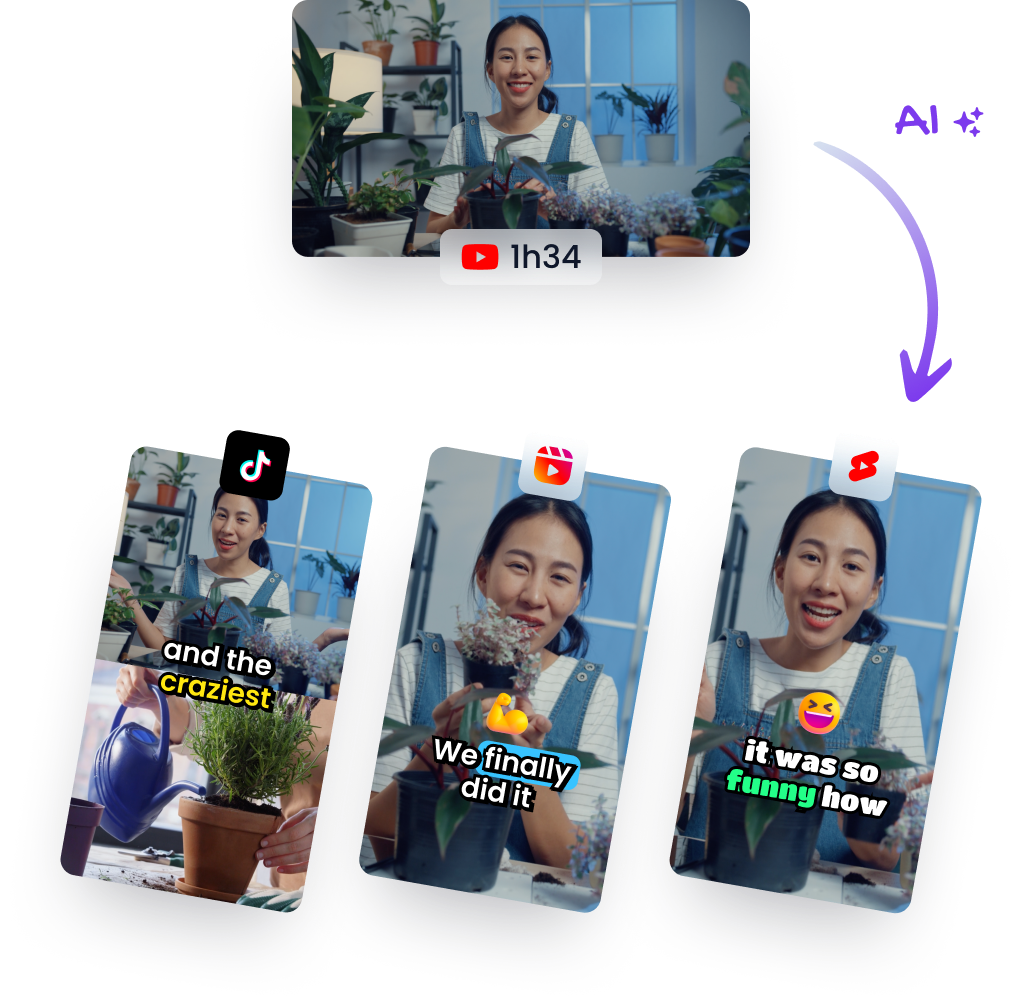
A video to reels maker AI is a smart tool that digs through your long-form videos to find the best, most shareable moments. In practical terms, you feed it one long video—like a podcast or a webinar—and it automatically chops it up into short clips perfect for Instagram Reels, TikTok, or YouTube Shorts. This whole process saves creators from the mind-numbing task of manually finding, cutting, and captioning every single clip.
Why AI Is a Game-Changer for Repurposing Video
If you're a creator or marketer, you know the pressure is always on to churn out more short-form video. The problem is, manually digging through an hour-long podcast just to find a couple of 30-second gems is a massive time-suck. It’s a bottleneck that kills both your schedule and your creative spark.
This is exactly where a video to reels maker AI steps in. Think of it as a super-intelligent assistant that automates the most grueling parts of repurposing. Instead of spending hours staring at a timeline, you can feed it one long video and get a whole pipeline of high-potential clips back in minutes.
The Old Way vs. The New Way
Imagine a podcaster trying to keep up with social media. Before using AI, they might spend three hours editing their one-hour interview, and if they're lucky, they'll walk away with one or two clips for the entire week. Trying to post daily with that workflow? Forget about it.
Now, with an AI tool in their corner, that same one-hour video can spit out ten or more potential Reels in less than 15 minutes. The AI is smart enough to spot the key questions, insightful answers, and funny moments, serving them up as clips that are nearly ready to go. The creator's job shifts from tedious grunt work to making a few final, strategic tweaks.
This changes everything. It turns content repurposing from a chore that eats up your resources into a scalable system for growing your audience. You're no longer just working harder; you're working smarter by letting automation do the heavy lifting.
To really see the difference, let's break down the old manual process versus letting an AI handle it.
Manual vs AI-Powered Clip Creation
MetricManual EditingAI Video to Reels Maker
Time Investment
3-5 hours per long-form video
10-15 minutes per long-form video
Output Volume
1-3 clips per video
10-20+ clips per video
Cost
High (editor's salary or hours of your own time)
Low (affordable monthly subscription)
Process
Scrubbing timelines, manual cutting, captioning
AI-driven topic detection & clip selection
Consistency
Difficult to maintain daily posting
Easy to create a backlog for consistent posting
The table makes it pretty clear. AI tools don't just save a little time—they fundamentally change the economics of content production, making high-frequency posting a realistic goal for everyone.
The Growing Demand for Efficiency
This need for speed and scale is exactly why the AI video market is exploding. What was a $534.4 million market is on track to hit a staggering $2,562.9 million by 2032. This growth is being driven by marketers and creators who are desperate for a more efficient workflow—in fact, 49% of marketers are already using AI video tools to automate tasks like pulling clips and adding captions. You can explore more insights about the AI video generator market to see where things are headed.
For a marketing agency, this means they can scale up content production for all their clients without having to hire more editors. For a solo YouTuber, it means having a constant stream of promo clips for every new video they upload. Tools like an AI reel generator are the answer to these common pain points, finally making it possible for anyone to post great content, consistently.
From Long-Form Video to Your First AI-Generated Clip
Getting started with an AI video-to-reels maker is surprisingly simple. Your first move is to just feed it your long-form video, and you've got two main ways to do this: either upload a file straight from your computer or just paste in a YouTube link.
That second option is a real time-saver. Say you just finished a 45-minute webinar. Instead of downloading that massive file only to re-upload it, you can just grab the YouTube link. The AI gets to work right away, saving you a ton of time and bandwidth before you've even lifted a finger.
What’s Happening Behind the Scenes?
Once you’ve given the tool your video, the AI kicks into high gear. It’s not just slicing your video into random 60-second chunks; it's performing a pretty sophisticated analysis to find the moments most likely to go viral.
Here’s a quick look at what’s really going on:
- It transcribes everything. The AI listens to your entire video to understand what's being said. This is why clear audio is so important—the better the sound, the better the AI can identify topics and pull out killer quotes.
- It hunts for hooks. Next, it scans that transcript for semantic cues. Think questions, bold statements, lists, or any turn of phrase that signals a juicy, self-contained idea that can stand on its own.
- It generates your first clips. Based on those hooks, the AI serves up an initial batch of short clips, each one centered around a compelling point from your original video.
This whole process is about turning one big asset into many smaller ones, completely on autopilot.
As you can see, a single long recording becomes a treasure trove of short, shareable clips, all thanks to that initial AI scan.
From Hours to Minutes
The speed is where the real magic happens. Let's go back to that 45-minute webinar. If you were doing this manually, you’d probably spend the rest of the afternoon scrubbing through the timeline, trying to pinpoint those "aha!" moments. Even a seasoned video editor might spend 2-4 hours pulling just a handful of decent clips.
An AI video-to-reels maker, on the other hand, can process that same video and hand you 10-15 potential Reels in less than 30 minutes. All the grunt work is done for you.
This completely flips your role from tedious editor to creative director. Your job is no longer to find the needle in the haystack; it's simply to look at the needles the AI has found for you and pick the sharpest ones.
The goal isn't just making clips. It's about instantly finding the most valuable, shareable ideas buried in your long-form content, all without the manual labor. The AI gives you an incredible head start.
This is the foundation for creating content at scale. You can find out more about how a modern long-to-short video converter makes this happen. Forget the old "one video, one Reel" mindset. The new math is one video, many Reels, which unlocks a world of new opportunities.
Once your video is uploaded, the real magic begins. A smart video to reels maker AI doesn’t just slice your content randomly; it acts like a seasoned producer, scanning your footage to pinpoint the moments with the highest potential to go viral. It’s like having an expert editor who instantly spots the gold.
The whole process kicks off with a deep dive into your video’s transcript. The AI isn't just looking for keywords. It’s analyzing the conversational structure—identifying topic shifts, key questions, and powerful statements. These moments are the natural hooks that can easily be packaged into compelling, standalone clips.
Smart Framing for a Mobile-First World
One of the most mind-numbing manual editing tasks is reframing a horizontal video to fit a vertical screen. The AI completely automates this with features like auto-reframing or face tracking.
Think about a podcast interview with two speakers. If you were reframing it by hand, you’d be constantly tweaking the frame to keep the person talking in the center. It’s tedious and takes forever.
The AI, on the other hand, handles this instantly. It detects who’s speaking and automatically centers their face in the 9:16 vertical frame. This dynamic reframing keeps the visual focus right where it needs to be, giving your Reels a polished, professional look without you ever touching a keyframe.
The AI essentially becomes your virtual camera operator, ensuring your content is perfectly tailored for how people actually watch videos on their phones—vertically.
This feature is a massive time-saver. Just look at the difference in workflow:
- Without AI: You’d have to manually set keyframes for every single speaker change, adjusting the position and zoom. For a long interview, that could easily eat up an hour or more.
- With AI: The tool does all the heavy lifting in seconds. It knows when the host is talking and when the guest replies, then cuts and frames the shot perfectly every time.
This intelligent framing ensures your content isn't just repurposed; it's genuinely adapted for platforms like TikTok and Instagram, where vertical video is king.
Generating Dynamic Word-by-Word Captions
It’s no secret that a huge number of people watch social media videos with the sound off. Some studies suggest that number is as high as 85% on platforms like Facebook. If you don't have captions, your message is completely lost on most of your audience.
A good video to reels maker AI solves this by automatically generating dynamic, word-by-word captions. These aren’t your grandma’s static subtitles. The AI actually highlights words as they're spoken, creating a slick visual effect that keeps viewers locked in.
This does more than just make your content accessible—it’s a retention booster. The animated text gives viewers a reason to follow along, making them far more likely to stick around for the entire clip. It also means you can ditch third-party captioning software and the headache of syncing text to audio, saving you yet another step in the editing process.
Refining Your Clips for Maximum Impact
An AI video to reels maker gets you about 90% of the way there, which is a massive head start. But that final 10%? That’s where your creative touch turns a good clip into something unforgettable. The AI serves up an excellent first draft, freeing you up to focus on the small, strategic polishes that actually make a difference.
This is your chance to elevate the content and make sure every second is perfectly tuned for your audience.
I always start by fine-tuning the timing. The AI is great at spotting key phrases, but you understand the nuance and rhythm of your own speech. Trimming a clip to start a fraction of a second earlier can capture the perfect setup, while letting the end breathe for a moment longer helps a punchline land with more impact.
It’s not about re-editing the entire video; it’s about those subtle tweaks that amplify the clip’s power.
Polishing Your Captions and Brand Voice
Next, I jump straight to the captions. AI transcription is shockingly accurate these days, but it doesn’t know your brand’s specific terminology, inside jokes, or industry slang. This is a quick but absolutely vital editing step.
Here's my usual checklist:
- Correct Industry Jargon: The AI might hear "SaaS" and write "sass." A quick fix keeps you looking professional.
- Add Brand Terms: If you call your community "The Trailblazers," make sure the captions reflect that unique language.
- Boost Readability: I love breaking up long sentences or adding punctuation for dramatic effect. A well-placed ellipsis or em dash can completely change the tone.
This is also a great opportunity to improve accessibility and clarity. If you want to go deeper on captioning, our comprehensive subtitle generator guide is packed with more advanced tips.
This level of detail really matters. It’s no surprise that 96% of marketers say AI personalization is a game-changer, and with video now making up 82% of all internet traffic, these small refinements have a huge payoff.
For podcasters and YouTubers, repurposing one long video into dozens of polished, platform-ready clips stretches the value of every single recording.
Applying Your Unique Brand Style
Once the timing and text are locked in, the final step is adding your visual identity. A good video-to-Reels maker will let you set up brand presets, so you can apply your specific fonts, color palette, and logo placement with a single click. This ensures every clip you post looks and feels like you, creating a cohesive and professional feed.
Pro-Tip: When trimming clips, listen for the natural rhythm of your speech. A well-timed cut, right before or after a pause, can amplify a point's impact and make the Reel feel much more dynamic.
If you want to get even more creative, you can work with the audio itself. For more advanced sound design or to repurpose specific audio moments, knowing how to extract audio from video files opens up a whole new world of possibilities.
Ultimately, these tools give you full control, letting you blend AI efficiency with your own indispensable creative vision.
Optimizing and Publishing for Higher Engagement
Getting a slick, compelling clip from a video to reels maker AI is a fantastic start, but it's only half the battle. The real test begins the moment you hit "publish." The choices you make in these final steps are what separate a Reel that fizzles out with a few dozen views from one that actually catches fire.
First things first, let's talk about quality. Never compromise on your export settings. Your absolute baseline should be 1080p resolution at 30 frames per second (fps). Anything less, and you risk the platform's compression algorithms turning your sharp video into a pixelated mess. A crisp, smooth video just looks more professional and holds attention better on mobile screens.
This is especially critical on platforms like Instagram, where visual quality can make or break your content's performance.
Your Pre-Publishing Checklist
Before that video goes live, take a minute to run through a quick but crucial checklist. This isn’t just about the clip itself; it’s about dressing it up for success so the algorithm—and your audience—can’t ignore it.
- Write a Killer Caption: Your caption needs to do more than just describe the video; it should amplify it. If the AI tool pulled out a provocative question to use as a hook, echo that question in your caption. This is a direct invitation for people to jump into the comments.
- Get Your Hashtags Right: Don't just throw random tags in. Use a smart mix of broad terms (like #videomarketing), niche community tags that your ideal viewer follows, and a few trending ones if they fit.
- Post When People Are Watching: Dive into your analytics and find out when your followers are actually online and scrolling. Posting during these peak hours gives your content that initial burst of momentum it needs to get noticed.
Treating this as a non-negotiable routine can make a world of difference in how your clips perform right out of the gate.
The AI does the heavy lifting by finding the hook in your video. Your job is to amplify that hook in your caption. This synergy is what turns passive viewers into engaged community members who comment and share.
There's a reason short-form video is king right now. Data consistently shows that videos under 60 seconds deliver the best return, which is the sweet spot for clips repurposed from longer content like podcasts or webinars. On Instagram and Facebook, Reels are a dominant force, with an incredible 3.5 billion reshared every single day. Their engagement rate blows other formats out of the water.
A Quick Guide to Platform Specs
While the core strategy is similar everywhere, each platform has its own personality and preferences. Keeping a quick reference guide handy ensures you're tailoring your clips for the best possible performance, wherever you post.
Short-Form Video Platform Specifications
This little table is your cheat sheet for making sure every clip you export is perfectly optimized for its destination. A few seconds of review here can save you from the frustration of a low-performing video.
PlatformRecommended LengthAspect RatioKey Optimization Tip
Instagram Reels
15-60 seconds
9:16
Use trending audio alongside your original sound to tap into discoverability.
TikTok
15-30 seconds
9:16
The first three seconds are everything. Your visual hook has to be immediate to stop the scroll.
YouTube Shorts
Under 60 seconds
9:16
Write a curiosity-driven, keyword-rich title. Shorts are heavily influenced by search.
Tailoring your content isn't about creating entirely new videos for each platform. It's about making small, strategic tweaks to the same great clip to give it the best chance to succeed within each unique ecosystem.
Common Questions About AI Video Tools
Jumping into a new tool, especially one powered by AI, always comes with a few questions. A video to reels maker AI can feel like a black box, but once you understand what's happening under the hood, you can get way more out of it.
Let's clear up some of the most common questions creators and marketers have before they get started.
How Good Is The AI At Actually Finding Interesting Clips?
This is the big one, right? The honest answer is: surprisingly good. These tools aren't just chopping your video into random 60-second chunks.
The AI is actually analyzing the video transcript for semantic cues—it's looking for questions, shifts in topic, lists, and powerful statements. This helps it pinpoint moments that can stand on their own as engaging, self-contained clips.
You'll always want to give the suggestions a final once-over, but the AI consistently gets you 80-90% of the way there. Think of all the hours you'll save not having to manually scrub through footage hunting for those golden nuggets yourself.
Can I Use These Tools For Any Type of Video?
They work best with any kind of dialogue-driven content. If people are talking, the AI has something to work with.
Think podcasts, webinars, interviews, coaching calls, educational lectures, and talking-head videos. The AI’s real strength is its ability to understand spoken language and identify the most important conversational beats.
Where will it struggle? Content that’s purely visual, like a cinematic travel vlog with no voiceover or a music video. But for the vast majority of creators and marketers who produce speech-based content, it's a perfect fit for scaling your output.
The AI is your assistant, not your replacement. It handles the tedious technical work, freeing you up to focus on creative strategy, brand voice, and engaging with your community.
Will My Clips Lack Creativity and All Look The Same?
Not at all. In fact, it's usually the opposite. By automating the most repetitive, mind-numbing tasks, the AI actually frees up your time and mental energy to focus on the creative side of things. You always have the final say.
Here’s how you stay in the driver's seat:
- Adjust Clip Timing: You can easily fine-tune the start and end points of any clip. This is perfect for nailing the comedic timing or making sure a key message lands with maximum impact.
- Edit All Captions: The AI-generated captions are a great start, but you can tweak them to correct jargon, add your brand’s unique terminology, or just match your authentic voice.
- Customize Your Style: This is where your brand comes to life. Apply your specific fonts, colors, and logos to make sure every single clip is cohesive and instantly recognizable as yours.
Think of the AI as a brilliant assistant that hands you a high-quality first draft, ready for you to add your unique polish.
Is It Worth The Cost If I Can Edit Videos Myself?
For most people, the return on investment is immediate. Just do a quick calculation on the value of your time.
Let's say it takes you four hours to manually find, clip, caption, and edit five Reels. That's half a workday spent on a small batch of content. An AI tool can generate those same five clips—and probably a few more options—in under 30 minutes.
The monthly subscription almost always costs far less than you’d pay a freelance editor for the same work. More importantly, it's a tiny fraction of the value of the hours you get back to focus on the things that actually grow your brand.
Ready to stop wasting hours on manual editing and start creating content at scale? Klap turns your long-form videos into a pipeline of viral-ready shorts in minutes. Try it for yourself and see how easy it is to grow your audience. Get started with Klap today!