How to Convert Long Videos into Viral Short-Form Content
Other
Turning your long videos into short-form content is more than just a time-saver. It's about mining your existing footage for gold, finding those compelling moments, and re-editing them for platforms like TikTok, Reels, and Shorts. This isn't just about efficiency; it's a powerful discovery engine that drives new viewers straight back to your flagship content. You're basically unlocking the hidden potential in a library you've already built.
Why Short-Form Content Is a Non-Negotiable Strategy
You've already put in the hours creating detailed YouTube videos, webinars, and podcasts. But let's be honest, in a world of shrinking attention spans, relying only on long-form content means you're leaving a huge audience on the table. The entire conversation has shifted to rapid-fire, vertical videos, and if you want to stay relevant, you have to adapt.
Repurposing isn't just a trend; it's a core piece of modern content distribution. Think of your long-form video as the main course. Your short-form clips are the appetizers—small, enticing samples that give viewers a taste of what you offer and leave them wanting more. This approach squeezes every last drop of value from your initial investment, making every piece of content work harder for you.
To put it in perspective, let's break down how these two formats serve different purposes.
Long Form vs Short Form Content At a Glance
Here’s a quick comparison to see how long-form and short-form content function differently in a creator's toolkit.
AttributeLong Form Content (e.g., YouTube, Podcasts)Short Form Content (e.g., TikTok, Reels, Shorts)
Primary Purpose
Deep dives, tutorials, storytelling, building authority.
Grabbing attention, sparking curiosity, driving discovery.
Audience Engagement
Builds a loyal community through in-depth value.
Generates quick reactions, shares, and broad reach.
While long-form content builds deep relationships, short-form content is your hook to start those relationships in the first place.
Unlocking New Audiences and Growth
Every platform—TikTok, Instagram Reels, YouTube Shorts—has its own unique algorithm and user base. By creating tailored short clips, you can tap into communities that might never stumble upon your main YouTube channel or podcast.
I've seen this work wonders for:
- Boosting discoverability: Short-form algorithms are literally built to push engaging content to new users. It's an organic reach engine on steroids.
- Skyrocketing engagement: Quick, punchy clips often generate way more likes, comments, and shares relative to their length. This signals to the platforms that your content is valuable, so they show it to even more people.
- Driving real traffic: A well-placed call-to-action can funnel viewers from a viral Reel or Short directly to your full-length video, your blog, or even a product page.
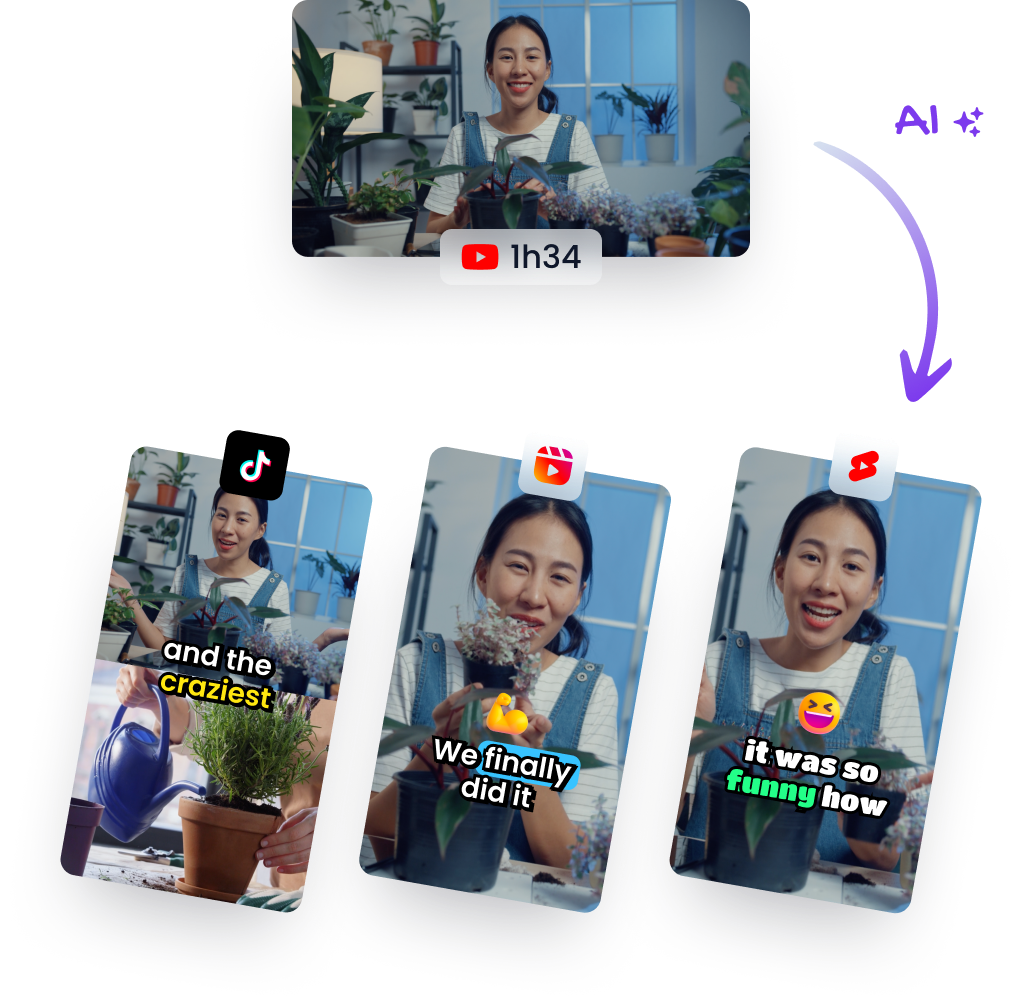
Just look at this screenshot from Klap, an AI tool designed to help creators automatically turn YouTube videos into viral short clips.

The interface makes it clear how one long video can be sliced into multiple, ready-to-publish short clips, completely overhauling the old, tedious workflow.
The Data-Backed Imperative
This massive shift toward short-form video isn't just a feeling; the numbers are screaming it. Projections show that short-form video is on track to make up 90% of all global internet traffic by 2025, with ad spending in the space expected to blow past $100 billion.
When you see that kind of money moving, you know it's not a fad. With video already accounting for a staggering 82% of internet traffic, this evolution is undeniable. If you want to dive deeper, Vidico's research on the rise of short-form video is a real eye-opener.
Repurposing your long-form content into shorts is no longer a "nice-to-have." It's a fundamental strategy for survival and growth in a content-saturated world. It allows you to meet your audience where they are, without reinventing the wheel.
How to Find Viral Moments in Your Existing Videos
Let's be real: not every second of your long-form video is a viral masterpiece waiting to happen. The real art is learning how to spot the hidden gems—those killer hooks, surprising stats, or actionable tips buried inside your longer content.
This means you have to rewatch your videos through a completely different lens. You're not looking at the overall story anymore. Instead, you're hunting for standalone moments that can pack a punch all on their own. Think punchlines, shocking reveals, or powerful quotes that make someone stop scrolling.
Think Like the Algorithm
To turn your long videos into great short clips, you have to get inside the mind of the algorithm. What grabs someone's attention in the first 3 seconds? It's a brutal, fast-paced world out there.
One massive study reported a staggering 70% growth in short-form video posts this year alone, with nearly 6 million clips published from just one platform's users. You can dig into more of that data in Metricool's comprehensive 2025 report. That firehose of content is your competition. Your clips need to deliver value or spark curiosity almost instantly.
The perfect short-form moment isn't just a random snippet; it's a self-contained story. It needs a clear beginning (the hook), a middle (the value), and an end (the takeaway), even if it's only 30 seconds long.
How to Manually Spot Engaging Clips
Rewatching your own content can feel like a chore, but going in with a checklist makes it way more productive. I like to keep a simple spreadsheet open and jot down timestamps for any segment that hits one of these marks:
- Emotional Peaks: Any moment where you or a guest shows genuine emotion—big laughs, a look of surprise, visible frustration. Emotion is magnetic and super shareable.
- Controversial Takes: Did you say something that goes against the grain? A unique or even slightly controversial opinion is pure gold for sparking debate in the comments, which algorithms love.
- "Aha!" Moments: Pinpoint the exact second you break down a complex idea into a simple, easy-to-understand explanation. These little educational nuggets are incredibly valuable.
- Actionable Tips: Look for quick, practical advice someone can use right away. Listicle-style clips like "3 ways to fix..." almost always perform well.
- Unexpected Turns: Did a guest say something totally out of left field? Did an experiment go sideways? The unexpected is one of the most powerful hooks you can have.
This manual process works, but it can eat up a ton of your time. That’s why a lot of creators use shortcuts. For instance, an accurate podcast transcription tool can let you scan the text of your video for powerful keywords or phrases, helping you find promising sections without having to rewatch hours of footage.
The AI-Powered Shortcut
This is where modern AI tools really shine. Platforms like Klap are built specifically to do this heavy lifting for you.
All you do is drop in a YouTube link. The AI gets to work, analyzing your video’s transcript, tone, and even visual cues to automatically pinpoint the most compelling, high-potential segments. It’s trained to find those emotional peaks, concise explanations, and burning questions, saving you hours of manual work so you can get back to being creative.
Choosing Your Editing Workflow: Manual vs. AI
Okay, you've found the golden nuggets in your long-form video. Now comes the fun part: turning those raw segments into scroll-stopping short clips.
The path you take from here—a hands-on manual approach versus an AI-powered workflow—will make a huge difference in your speed, creative output, and frankly, your sanity.
The Old-School Manual Method
Going the manual route gives you absolute, granular control. Using software like Adobe Premiere Pro or CapCut, you can meticulously tweak every single frame to perfection. This means manually reframing your horizontal video to a vertical 9:16 layout, painstakingly adding and timing captions for sound-off viewers, and peppering in visual hooks like emojis or text overlays.
But that level of control comes at a steep price: your time. Research into creative workflows has shown that editors can burn up to 50% of their time on repetitive, non-creative grunt work like reframing and transcribing. For any creator trying to stay consistent, that’s a massive roadblock.
You start by importing your clip. Then, you have to reframe every shot to keep the speaker centered in the new vertical format—a tedious task, especially if there's any camera movement.
Next up, captions. This isn't just typing out words; it's transcribing the audio, syncing each word perfectly, and often animating them to keep wandering eyes locked on the screen. For a single 60-second clip, this alone can easily eat up 15-30 minutes.
The manual process gives you ultimate creative freedom, but it forces a trade-off. You're exchanging hours of your time for pixel-perfect control that AI can now replicate with surprising accuracy.
This flowchart breaks down that initial decision-making process for spotting clips with viral potential, which happens before you even think about editing.
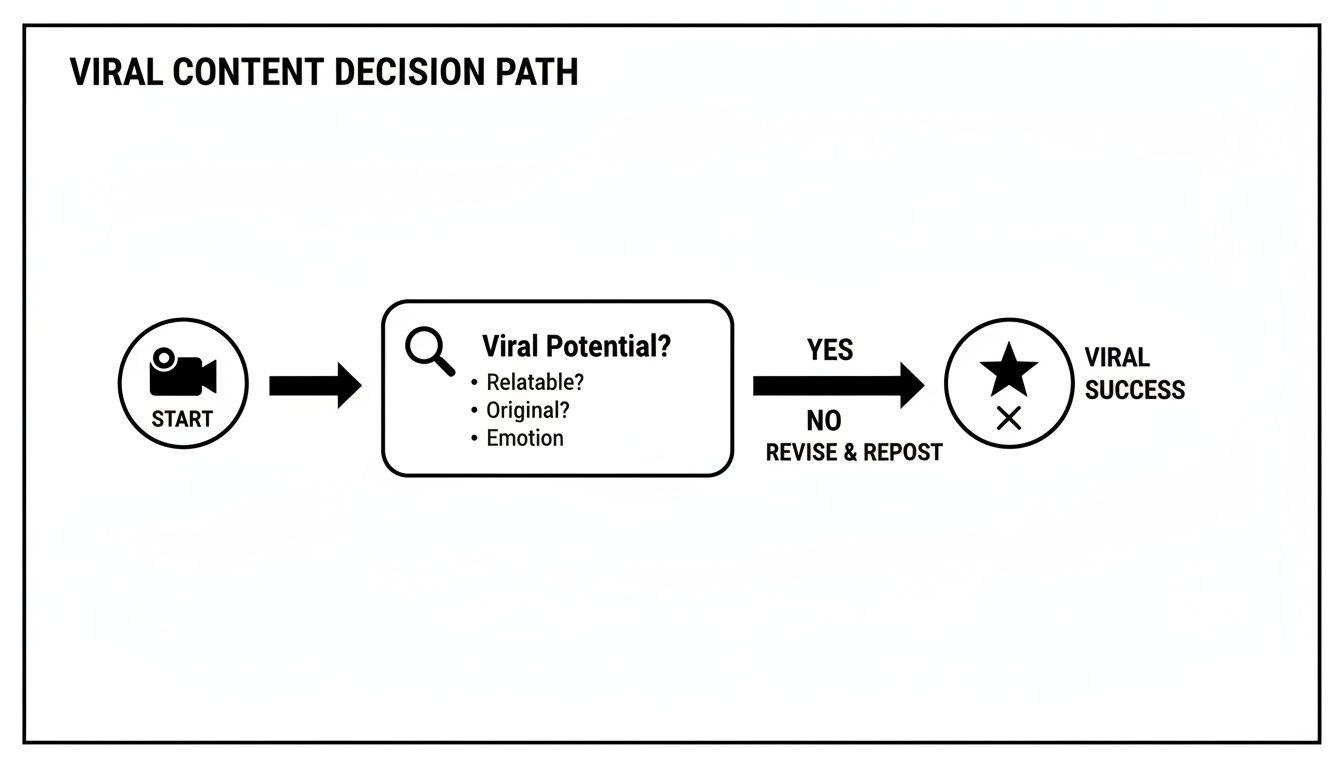
Knowing which clips have the best shot at success helps you decide whether to invest the time in a manual edit or let an AI do the heavy lifting.
The AI-Powered Alternative
This is where AI platforms completely change the game. Instead of a clunky, multi-step manual process, tools like Klap turn the whole workflow into a few clicks.
You just drop in a YouTube link, and the AI gets to work. It automatically reframes the video using intelligent face-tracking, making sure the speaker is always perfectly centered. No more keyframing.
At the same time, it generates stylish, animated captions that are already optimized for social media feeds. The AI doesn't just transcribe; it designs the captions to be visually engaging and easy to consume on the fly. What once took an hour of manual labor is now done in minutes.
This kind of efficiency lets you convert long video to short form content at a scale that's just not possible by hand. To see it in action, check out this great overview of an AI short video generator.
To really see the difference, let's break down the time and effort involved side-by-side.
Manual Editing vs AI-Powered Workflow (Using Klap)
TaskManual Workflow (e.g., Premiere Pro/CapCut)AI Workflow with Klap
Clip Selection
Manually scrubbing through footage to find moments (15-30 mins)
AI identifies viral moments automatically (2-5 mins)
Reframing
Tedious keyframing to keep subject centered (10-20 mins)
Auto-reframing with face tracking (Instant)
Captioning
Manual transcription, syncing, and styling (15-30 mins)
Auto-generates dynamic, styled captions (Instant)
Adding Hooks
Manually adding text, emojis, or overlays (5-10 mins)
AI suggests hooks and auto-populates relevant emojis (1-2 mins)
Total Time/Clip
45-90 minutes
3-7 minutes
As you can see, the time savings are staggering. The AI workflow doesn't just make you faster; it frees you up to focus on the bigger picture—your content strategy—instead of getting bogged down in repetitive edits.
When you're weighing your options, it helps to look at the broader discussion around AI vs. manual methods for creative tasks. While the old way offers total control, modern AI tools provide a level of speed and efficiency that allows you to out-produce and out-publish the competition.
Optimizing Your Clips for Each Social Platform
Look, creating a killer clip is a great start, but it's only half the job. If you really want to get results when you convert long video to short form content, you have to optimize each clip for the platform where it's going to live.
A video that blows up on TikTok could easily fall flat on Instagram Reels or YouTube Shorts. Why? Because each platform has its own algorithm, its own audience, and its own unspoken rules.
Think of it this way: you wouldn't wear the same outfit to a casual BBQ that you'd wear to a business meeting. Your content needs to be "dressed" for the occasion, too. Just blasting the exact same video everywhere is a fast track to mediocre results.
Tailoring for TikTok, Instagram, and YouTube Shorts
At first glance, these platforms all look the same, but under the hood, their algorithms are looking for very different things. Getting a handle on these differences is what separates the clips that get seen from the ones that disappear.
- TikTok: This is the land of trends, authenticity, and raw energy. Using trending audio is basically a requirement here. A neat trick is to add a popular sound and turn its volume way down behind your original audio. This still gives the algorithm the signal it needs to show your clip to more people.
- Instagram Reels: While trends are still a factor, Reels tends to reward higher production quality and a more polished, aesthetic vibe. The audience is often a bit older than TikTok's, so educational or aspirational content can do incredibly well.
- YouTube Shorts: This is the SEO player of the group. Since Shorts live on YouTube, things like your video's title and description matter—a lot. Packing them with relevant keywords is your best bet for getting discovered, especially since Shorts pop up next to regular long-form videos based on what someone's been watching.
A one-size-fits-all approach is a recipe for wasted effort. Taking a few extra minutes to customize your captions, sounds, and on-screen text for each platform can make a massive difference in your reach.
The Evolving Landscape of Video Length
The old rule of thumb was "shorter is always better." That came from the early days of 15-second TikTok dances. But things have changed. As audiences have gotten used to short-form content, they're starting to look for clips with a bit more substance.
The latest data shows a pretty wild shift: Reels between 60 and 90 seconds are now getting the highest engagement, pulling in more than double the views of clips under 30 seconds. This completely flips the old "shorter is better" idea on its head. It proves viewers will absolutely stick around if you're giving them something valuable. You can dig into the data yourself by checking out the full Socialinsider report.
What does this mean for you? It means you don't have to butcher your message to cram it into 30 seconds. If a key takeaway from your original video needs 75 seconds to land properly, let it. The algorithms are finally starting to reward depth over pure brevity.
Actionable Optimization Checklist
Before you hit publish, run through this quick checklist. It's a simple way to make sure you're giving each clip the best chance to succeed on its native platform.
PlatformKey Optimization TacticWhy It Works
TikTok
Add relevant trending audio (even at 1% volume).
Signals to the algorithm that your content is culturally relevant, boosting its initial reach.
Instagram Reels
Create a visually appealing custom cover image.
A strong cover image encourages clicks from the Explore page and your profile grid.
YouTube Shorts
Write a keyword-rich title and a brief description.
Taps into YouTube's powerful search engine to attract viewers actively looking for your topic.
Building a Sustainable Content Repurposing System
A single viral hit feels incredible, but let's be real—consistency is what actually builds a brand and a loyal audience. The final piece of this puzzle isn't just knowing how to chop up a long video; it's about building an efficient workflow that makes repurposing a core part of your strategy, not just a frantic afterthought.
A sustainable system turns this process from something you do "when you have time" into a well-oiled machine that constantly feeds your content channels.
This system doesn't need to be complicated. It all starts with batching. Instead of editing and posting one clip at a time, just block off a couple of hours each week to process one long-form video. That simple shift moves you from reactive content creation to proactive, strategic publishing.
From a single hour-long podcast, you could easily pull 10 to 15 high-quality short clips. This batching approach keeps your content pipeline full, taking off the pressure to constantly come up with something new from scratch.
Plan Your Posts with a Simple Content Calendar
Once you have a folder full of ready-to-go clips, you need a game plan. A content calendar is your best friend here, and it can be as simple as a Google Sheet or a Trello board. Map out your posts for the week or month, assigning specific clips to certain days and platforms.
This gives you a bird's-eye view of your content, helping you stay consistent. A solid calendar also lets you time your short-form content with other marketing efforts, like a product launch or a new blog post you're promoting.

Integrate AI for Maximum Efficiency
Look, building a sustainable system today means using smart tools. Platforms like Klap are designed to be the engine of your repurposing workflow. Instead of burning hours manually finding moments, cutting clips, and adding captions, you can automate almost the entire process.
By integrating an AI-powered long to short video converter, you can knock out the entire batching process in minutes, not days. This frees you up to focus on what really matters: analyzing what's working and actually talking to your community.
The goal of a sustainable system is to minimize friction. Every manual step you can automate is more time you can reinvest into creating better original content or figuring out what your audience loves.
Track What Works and Double Down
Finally, a sustainable system is a learning system. You have to track your metrics to understand what your audience actually connects with. Don't just post and pray; dig into the data.
- Views and Reach: Which clips are getting the most initial eyeballs?
- Watch Time: Are people sticking around until the end? This is a massive signal to the algorithm.
- Engagement Rate (Likes, Comments, Shares): What topics or formats get people talking?
When you find a winner—a clip that crushes all the others—don't just move on. Double down. Make more content around that topic or in that style. This data-driven feedback loop is what turns a good content strategy into a great one.
Got Questions About Repurposing? We've Got Answers.
Jumping into video repurposing can feel like a lot at first. Once you start turning your long videos into short clips, a ton of questions naturally come up. We hear the same ones all the time from creators just like you.
Let’s tackle some of those practical concerns head-on. Getting these cleared up will help you build a smarter workflow from day one and avoid the common mistakes that trip people up.
How Long Should My Short Videos Actually Be?
This is the million-dollar question, and frankly, the answer has changed. The old wisdom was to keep everything under 30 seconds, but recent data shows that audiences are sticking around for more substantial content if it’s good.
For example, a massive analysis of millions of videos found that Reels between 60 and 90 seconds are actually getting the highest engagement rates right now.
The perfect length really depends on the platform and the story you’re trying to tell. Don't be afraid to go a bit longer if the value is there. A good rule of thumb? Make the clip as long as it needs to be to land its point, and not a second longer.
Will Repurposing My Content Hurt My Main Channel?
This is a huge fear for so many creators, but it’s completely unfounded. In fact, the exact opposite is true. Repurposing your content is one of the best promotional tools you have for your main, long-form videos.
Think of your short clips as trailers for your main feature. Every Reel or TikTok you post is a chance to hook a brand new viewer and drive them back to your YouTube channel or podcast for the full experience. It's not cannibalization; it’s building awareness at the very top of your funnel.
The trick is to make sure your short clips are self-contained "micro-stories." They need to provide value on their own while still teasing the deeper content available on your main channel. That’s what gives people a compelling reason to go seek out the original.
Can I Just Post the Same Exact Clip Everywhere?
You can, but you absolutely shouldn't. Every platform has its own algorithm, its own culture, and its own audience expectations. A one-size-fits-all approach is a guaranteed way to leave views and engagement on the table.
Here’s a quick and dirty breakdown of what to keep in mind:
- TikTok: The algorithm loves trending sounds and raw, authentic energy. It doesn't have to be perfect, it just has to be real.
- Instagram Reels: This audience tends to favor higher-quality visuals and a more polished, aesthetic feel. Think clean and curated.
- YouTube Shorts: SEO is a massive factor here. Keyword-rich titles and descriptions are essential for getting discovered.
Taking just a few extra minutes to tweak your caption, audio, and title for each platform is one of the highest-leverage things you can do. It’s a tiny time investment that pays off big in reach. You want your content to feel like it belongs on the platform it’s on.
Ready to stop wasting time and start creating clips that actually grow your brand? Klap uses AI to find the best moments in your videos and turns them into ready-to-publish shorts in minutes. Try it for free at Klap.app.